The Idealogical War in Schools
On September 18, 2024, Toronto District School Board (TDSB) educators and middle school students from about 15 schools attended an anti-Israel protest under the guise of a school field trip. Parents had been asked to give consent for their children to learn more about the Grassy Narrows First Nation. However, social media later revealed that the students were instead participating in the rally. The trip was condemned by Ontario Premier Doug Ford, who accused the TDSB of attempting to “indoctrinate our kids.” The incident sparked widespread public debate and outrage about the role and boundaries of schools. This controversy highlights an ongoing tension between the public sphere, the State, and the private realm of the family—an issue that is far from new. Children have long been the ideological battleground, with various forces attempting to intervene in the family unit.
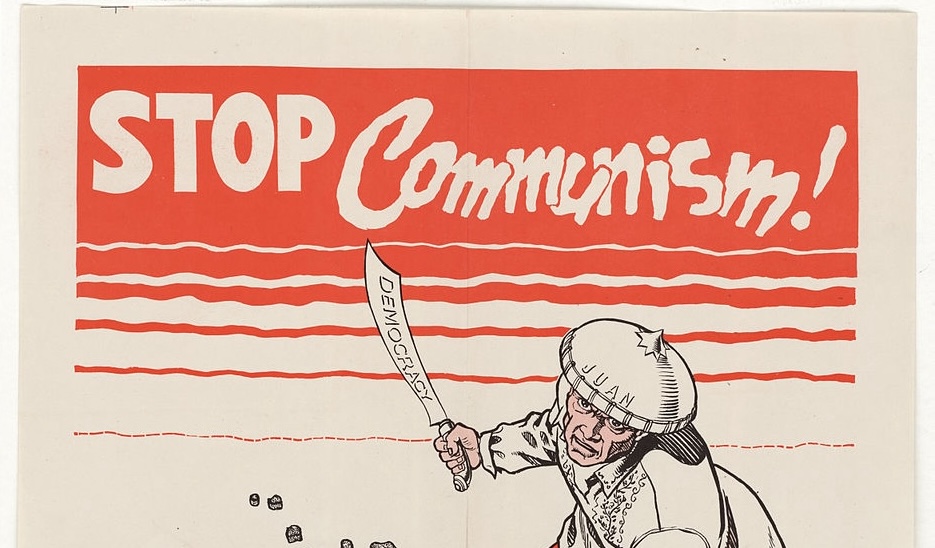
The Communist Manifesto explicitly called for the abolition of the bourgeois family unit, condemning it as merely a financial relationship. Marxists believed that as the benefits of the family structure dissolved, so too would the family itself. Much of this argument drew from Engels’ work in The Origin of the Family, Private Property and the State, in which he criticized the bourgeois family for its moral decay, allegedly brought about by property rights and forced monogamy. However, this proposed abolition was by no means a noble or virtuous cause; it was a strategy to completely and radically change society through the destruction of one of its most fundamental social institutions. What was envisioned to replace the family unit? The State. These ideas were promoted by individuals with specific, often revolutionary, agendas. During World War II, both Nazi Germany and the Soviet Union used similar tactics to indoctrinate children. In Nazi Germany, the Hitler Youth (Hitler-Jugend) trained children from ages 10 to 18 to embrace Nazi ideology, preparing them to serve the State. Similarly, in the Soviet Union, the Komsomol was used to instill Soviet values and even encouraged children to denounce their own families in the name of the communist dream.
In many respects, this tension continues today. Although the methods of indoctrination may be less overt, the State still exerts significant influence over the family unit, shaping the thoughts and actions of younger generations under the banner of the “greater good.” The most powerful tool the State has to carry out this mass ideological shift is the public education system. Some theorists argue that the expansion of public primary education in Western nations was partly designed to exert control over citizens, targeting them at a vulnerable age. Children are placed in these State-run institutions as early as age three, spending the majority of the next 14 years there. While these schools undoubtedly reflect society’s collective values to a certain extent, there is a concerning minority of activist educators and politicians who use their positions to promote and force their personal ideologies. This is unacceptable and a grave breach of society’s trust as a whole. No matter how noble or revolutionary the State’s ideals are, it does not have a right to indoctrinate children. Parents have the right to teach their children according to their own values and beliefs, at least until children are old enough to forge their own. This is not an extraordinary assertion.
It is time for citizens to demand that children no longer be a battleground and that the family unit be protected at all costs.

 Liberstate
Leave a comment