“Own Nothing, and You’ll Be Happy” – Or So They Claim
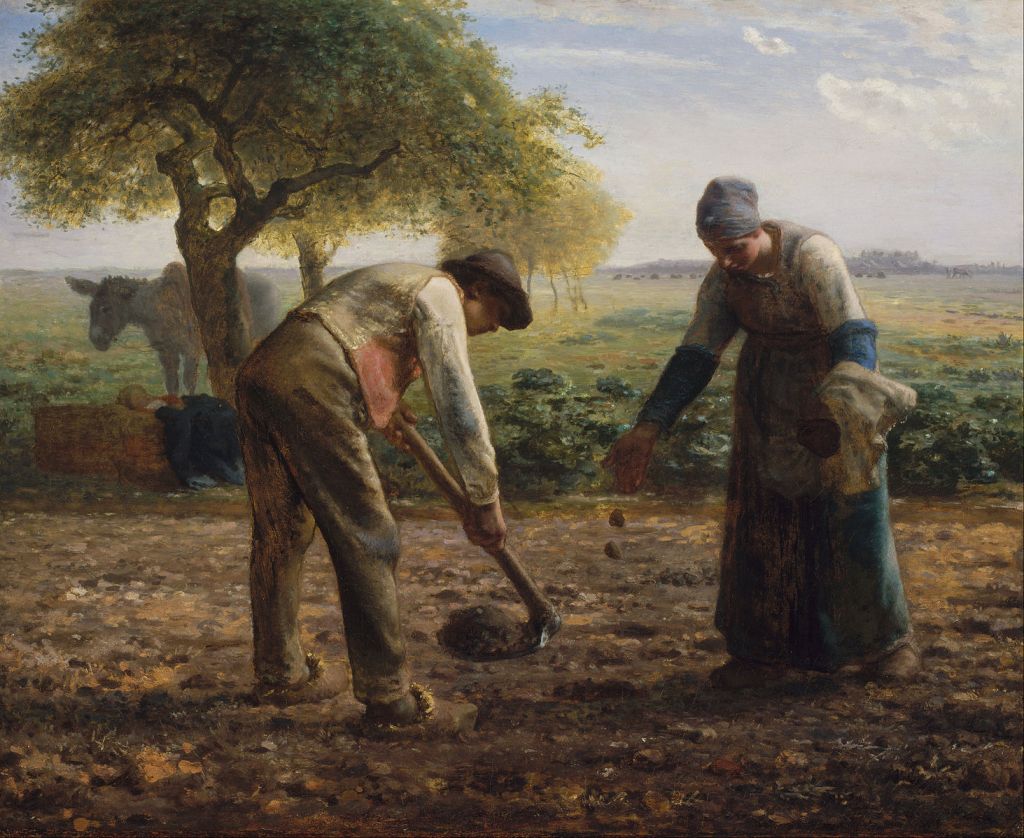
In November 2016, a member of the World Economic Forum’s network of Global Future Councils envisioned a future where ownership would be virtually eradicated and replaced with a socialist-style sharing of services and products. The concept gained traction after Ida Auken, a Member of the Danish Parliament, wrote a blog post imagining life in 2030.[1] While we are still far from this bleak future, our current form of property ownership rights already reflects a world where true individual property ownership is increasingly undermined by the government.
Property ownership has often been described as the bedrock of societies. Property ownership is the fundamental right to possess and use something to the exclusion of all others.[2] Whether or not there is a solid justification for why humans appropriated property for themselves, it may be explained by the necessity of land ownership for agricultural purposes. Where individuals exerted their labour to improve a plot of land, that person gained a right to exclude others from their toil.
The moment property rights arose, taxes swiftly followed. In Ancient Egypt, taxes were levied based on land value, with tax collectors assessing cattle and crop yields. When taxpayers were unable or unwilling to pay, they were quickly brought before a court that handed down swift judgment. In 1066, after William the Conqueror’s conquest of England, a form of land taxation was established in which every parcel was measured and its value estimated. The Domesday Book was created to record these assessments. Later, the English introduced a hearth tax, which taxed the number and size of hearths in each home. Unsurprisingly, none of these taxes were popular with the people.
The Current Form of Property Ownership
In Canada, the most common form of real property ownership is fee-simple, which is a freehold estate of inheritance that is absolute and unqualified.[3] One of its main features is perpetuity. However, fee simple is far from absolute or unqualified. Most fee-simple properties are subject to taxes, which can create a lien on the land. If property taxes go unpaid for three years in Ontario, municipalities have the right to take legal action and sell the property to recover the arrears. Beyond property taxes, the government can also expropriate land, albeit at supposedly fair compensation to the owner. The government has the power to seize all or part of a property or simply register an easement on it—such as for a hydro tower. In this context, it is hard to argue that ownership is truly absolute. The current form of property ownership bears more resemblance to “free socage,” an English feudal system in which farmers held land in exchange for fixed payments to their lords—except now, the government is the feudal lord. Property taxes can also push homeowners out of their homes, especially retirees. A person may have worked their entire life to own their home and save enough for their pension. When they retire, they should be able to rely on that toil and have a form of security in their “absolute” ownership. Instead, an ever-greedy government will continue raising their taxes until, eventually, they can no longer afford the property taxes and be forced to sell.
The Current Form of Property Taxation
Presently, in Ontario, property taxes are levied on both the land and any fixed improvements to it. This means that you can have two abutting properties located in the same neighbourhood on similar-sized parcels, but if one of these homes is renovated and the other is not, the renovated home will be assessed, and you will pay higher property taxes. Should municipalities have the right to assess properties, irrespective of the actual parcel size, and force them to pay more for the same services simply because the homes are worth more? Do these renovated homes require more services, or is the assumption that if you can afford to renovate, you should pay more for the same or, potentially, even fewer services than your neighbour?
Many defend property taxes because they fund essential services like road infrastructure, policing, transit, and schools. However, these services often overpromise and underdeliver. Take, for example, the rising number of robberies in the Greater Toronto Area. Taxpayers fund the police to enforce the law and protect their property (supposedly). However, the reality is that the police fail to respond adequately to these property crimes and often do not even follow up on attempted robberies, citing limited resources. There is no denying that our communities need these services, and collectively, we have agreed to contribute to them for the benefit of all. However, there is no real justification as to why the payment of these services must be tied directly to property ownership and, even more so, why property taxes must increase each year to fund an increasingly wasteful and inefficient government.
While property taxes may have long existed, this is no justification as to why they must continue their existence today. As we have all learned, just because something is rooted in history does not make it right or suitable today. Perhaps the day will come when man will truly have dominion over his land and his life. That day will be a much happier day.
[1] See: https://web.archive.org/web/20161125135500/https://www.weforum.org/agenda/2016/11/shopping-i-can-t-really-remember-what-that-is
[2] See the definition of property: https://thelawdictionary.org/property/
[3] See the definition of fee-simple: https://thelawdictionary.org/fee-simple/

 Liberstate
Leave a comment