It Came Just the Same: GST Break or Not
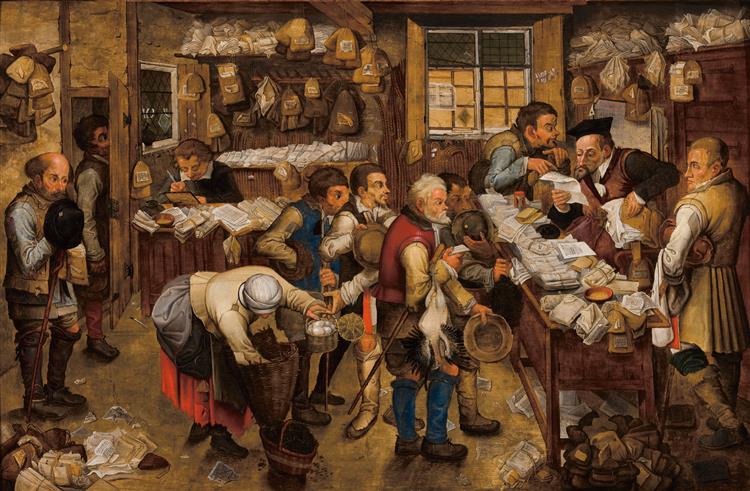
Pieter Brueghel the Younger, 1615.
On November 21, 2024, the Government of Canada announced that, starting December 14, 2024, and lasting until February 15, 2025, it would be “giving a tax break to all Canadians.”[1] The new tax relief would apply to prepared foods, restaurant meals, snacks, alcohol under 7% ABV, children’s clothing and essentials, children’s toys, books, and Christmas trees. This was the Liberal government’s response to the inflation, which they themselves were responsible for creating through their COVID-19-era policies. The government likely hoped that this gesture would be seen as a benevolent act, expected to curry favour with voters in the upcoming 2025 federal election. However, the reality is that the narrative has become so distorted that Canadians are expected to feel grateful to the government for being given back something that they should never have parted with in the first place.
The government operates under the assumption that it is entitled to Canadians’ hard-earned money, despite underserving them and offering little return on their investment. As such, any so-called “tax break” is portrayed as a gift to Canadians from a government sacrificing its own coiffeurs. This perspective is readily apparent in the government’s own rhetoric. In the Government of Canada’s announcement, they defended their own policies by stating that while “our government can[not] set prices at the checkout,” (despite being largely responsible for rising costs through policies like the carbon tax, which drove up grocery prices), the Liberal government “can give Canadians more money in their pocket.” What does that really mean? The government is not actually giving Canadians anything through a GST/HST exemption. They are merely refraining themselves from taking from Canadians in one way, while continuing to extract wealth from them in many other ways.
How has the government managed to so successfully appropriate taxpayer money as its own and skew the narrative? The goods and services tax is a relatively recent invention. Introduced in January 1991, the GST replaced the Federal Sales Tax, which had been in place since 1924. Prior to the First World War, the Canadian government primarily relied on custom duties, excises taxes and revenue from licenses and permits to funds its operations. Today, the government continues to collect revenues through customs, licenses/permits, in addition to a broad range of taxes that were not previously in existence.
GST targets consumption and is intended to be paid by the final consumer, which, in most cases, are households.[2] While basic groceries like bread and milk are HST Zero Rated, other products are not. Some of these non-HST Zero Rated items include clothing, hot coffee, vitamins and books. This is an example of a government tax expenditure, defined by CPA Canada as any tax measure designed to achieve a specific policy objective at the cost of lower government tax revenues. Like other tax expenditures, the government uses these tax incentives to encourage certain behaviours and consumption habits while discouraging others. Through HST Zero Rated items, the government decided that people should not be discouraged from buying essential groceries due to additional costs. However, at the same time, the government decided that items like clothing, vitamins, and books were not quite as essential, and thus consumers could bear the extra expense or simply refrain from purchasing the items if the added tax made them prohibitive. After all, why should the government incentivize reading? It simply does not increase consumer productivity.
[1] See the Government of Canada’s announcement: https://www.pm.gc.ca/en/news/news-releases/2024/11/21/more-money-your-pocket-tax-break-all-canadians-and-working-canadians-rebate
[2] Learn more about government tax expenditures: https://www.canada.ca/en/department-finance/services/publications/federal-tax-expenditures/2024/part-1.html
 Liberstate
Leave a comment